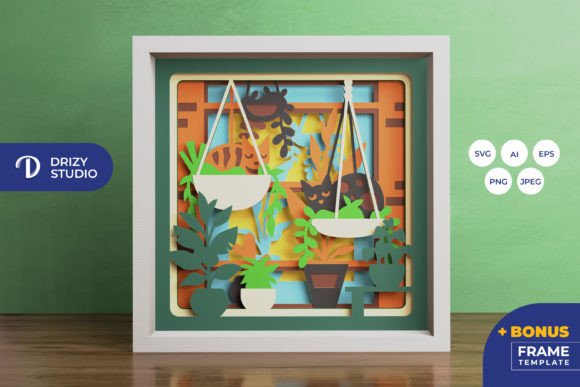
Cat on Hanging Potted Plants 3D SVG Shadow Boxes
As a brand designer who has spent years refining visual identities for local businesses, I approach every new graphic design asset with a critical eye. It is not enough for an illustration to be cute; it must serve a strategic purpose within a broader brand identity. Recently, I evaluated the Cat on Hanging Potted Plants 3D template for a potential client project, and the results were surprisingly versatile. This layered, square paper-cutting template offers more than just decorative appeal; it provides a structural foundation for creating depth and intrigue in packaging design and promotional materials.
First Impressions and Brand Personality
The initial mood created by this asset is one of whimsical tranquility. The interplay between the playful feline figure and the organic shapes of the hanging plants suggests a brand personality that is friendly, handmade, and slightly rustic. For a local business such as a boutique plant shop, a cozy cat café, or an artisanal soap maker, this aesthetic fits perfectly. It does not scream luxury minimalism, nor does it feel corporate. Instead, it exudes warmth and approachability.
When considering small business branding, emotional connection is paramount. This design asset bridges the gap between modern cleanliness and handcrafted charm. The 3D effect, inherent in the layered structure of the Shadow Boxes concept, adds a tactile quality even in digital formats. This makes it an excellent choice for brands that want to appear polished yet accessible, avoiding the sterility often found in generic clipart or mass-produced illustrations.
Strategic Applications in Local Business Design
The true value of the Cat on Hanging Potted Plants 3D lies in its adaptability across various touchpoints. In my review, I mapped out several practical applications for a hypothetical handmade candle brand looking to refresh its product label and marketing suite.
- Packaging Accents: The layered nature of the 3D SVG allows for intricate cut-outs on box lids or sleeve wraps, creating a shadow box effect that draws the eye on retail shelves.
- Social Media Graphics: Used as a central hero image, the design stands out in crowded feeds. It works beautifully for seasonal campaign visuals, especially during spring or holidays where themes of home and comfort are prevalent.
- Printable Inserts: For e-commerce sellers, including a thank-you card featuring this illustration enhances the unboxing experience, reinforcing the handmade business ethos.
- Website Banners: The square format is ideal for featured sections on homepages, providing a balanced focal point that does not overwhelm text-heavy areas.
Furthermore, this asset supports stronger visual hierarchy. By using the distinct layers of the cat and plants, designers can create depth that guides the viewer’s eye toward key information, such as product names or calls to action. This leads to better product recognition and a more professional presentation overall.
Where It Shines and Where to Exercise Caution
While versatile, this design is not a universal solution. It works best in contexts that celebrate creativity and warmth. I recommend using it for product mockups, decorative brand elements, and boutique visuals where the goal is to evoke a sense of care and detail. It is particularly effective for marketing visuals targeting demographics that value aesthetics and storytelling.
However, there are scenarios where this asset should be used carefully. For formal corporate branding or industries requiring strict regulatory compliance, such as pharmaceuticals or legal services, the playful nature may undermine authority. Additionally, on very small labels or ingredient-heavy layouts, the intricate details of the SVG design might become lost or cluttered. It is crucial to ensure that the decoration does not compete with important text, such as safety warnings or net weight information. Luxury minimalist brands should also proceed with caution, as the detailed layering may conflict with a stark, sparse aesthetic.
Practical Notes for Designers and Entrepreneurs
Before integrating the Cat on Hanging Potted Plants 3D into a client project, I always conduct a series of practical tests. First, verify the commercial license. Ensuring you have the right to use the asset for physical product sales and commercial design is non-negotiable for professional branding.
Next, test the asset in black and white. A strong illustration should hold its form even without color. This step is vital for cost-effective printing options like simple stamp designs or monochrome packaging inserts. Preview the design on small labels to check for legibility and impact. If the details blur at a smaller scale, consider simplifying the layers or using it only on larger surfaces like tote bags or posters.
Typography pairing is another critical consideration. I found that this design pairs well with both serif and sans serif fonts, depending on the desired tone. A handwritten font can enhance the rustic, friendly vibe, while a clean sans serif can modernize the look. Avoid overly ornate script fonts that might clash with the intricate lines of the paper-cutting style. Always compare the final composition with competitor packaging to ensure your brand identity remains distinct and memorable.
Finally, inspect the file quality. Whether you are working with a PNG design for web use or editing the vector paths in a Canva template or design software, ensure the transparency is clean and the edges are sharp. High-quality design assets reflect directly on the perceived quality of the product itself. By treating this template not just as a picture, but as a structural element of your professional branding strategy, you can elevate your local business presence significantly.
In conclusion, the Cat on Hanging Potted Plants 3D is a potent tool for creative entrepreneurs. When used with intention and technical precision, it transforms ordinary digital product listings and physical packages into engaging brand experiences. It reminds customers that behind every product is a thoughtful creator, which is the ultimate goal of effective editorial design and web design in the modern marketplace.