Review: Baby Koala Easter Egg Holder Design
As a designer who spends more time staring at stitch maps than actual fabric, I have learned to be skeptical of cute concepts. We see thousands of seasonal motifs every year, and most of them fail the practicality test. They look adorable on a screen but turn into a tangled mess of thread breaks and puckering on the hoop. However, when I first opened the file for the Baby Koala Easter Egg Holder, my initial reaction was not just about the aesthetic charm. It was about the structural integrity of the design.
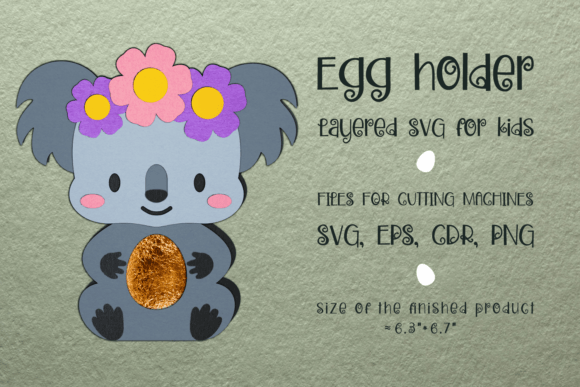
This is not your standard flat embroidery motif. The product description highlights that this is a 3D SVG intended for paper crafts and cutting machines, which immediately signals a different workflow. For us in the embroidery world, this presents a unique hybrid opportunity. We are not just stitching a picture; we are creating a component of a larger, tactile experience. The design falls under the Shapes category, which often implies simplicity, but here it suggests a focus on form and function. Let’s break down how this asset performs when moved from a digital preview to a tangible, stitched reality.
The First Impression: Mood and Visual Personality
The visual personality of the Baby Koala Easter Egg Holder is soft, inviting, and distinctly spring-oriented. The lines are clean, avoiding the excessive complexity that plagues many holiday designs. In embroidery, less is often more, especially when dealing with small details like animal features. The koala’s expression is gentle, which aligns perfectly with the target demographic: parents, gift-givers, and boutique owners looking for baby-friendly items.
What strikes me most is the layout. It is balanced. Many designers make the mistake of overcrowding a small shape with too much detail, leading to poor stitch definition. This design respects negative space. For an embroidery project, this means the satin stitches used for outlines will have room to breathe, and any fill stitches will lay flat without causing excessive pull on the fabric. The mood is playful yet refined, making it suitable for both casual handmade products and higher-end boutique branding.
Real-World Application: Beyond the Hoop
Let’s talk about where this actually works. I recently consulted for a small shop owner who wanted to expand her Easter line beyond standard towels. She was considering custom apparel and nursery decor. The Baby Koala Easter Egg Holder fits seamlessly into this mix, but with a twist. Since it is a 3D structure, the embroidery application is likely on the flat components before assembly, or as a decorative patch on a finished item.
Imagine this design stitched onto a high-quality cotton tote bag. The koala could serve as the central focal point, perhaps holding a real egg or a chocolate treat in a pocket sewn beneath the embroidered outline. For sweatshirt embroidery, the design works well on the chest or sleeve, provided the scale is adjusted correctly. The clean lines ensure that even on textured fabrics like fleece or French terry, the image remains recognizable. It does not get lost in the pile of the fabric.
For Etsy sellers, this versatility is gold. You can market it as part of a "Spring Surprise" collection. Use it on aprons for baking enthusiasts, or as a centerpiece on pillow covers for nursery decor. The key is to treat the embroidery as the anchor that draws the eye, while the 3D paper or fabric craft element provides the interactive surprise. This combination increases the perceived value of the finished product significantly.
Technical Considerations for Embroiderers
Before you load this into your machine, there are critical technical factors to consider. Since the source files are described as a DIGITAL PRODUCT for cutting machines, you must verify if specific embroidery formats (like PES, DST, or JEF) are included or if you are converting the SVG yourself. If you are converting, pay close attention to stitch density.
Stabilizer Choice: Because this design may involve layered elements or be applied to items that hold weight (like an egg holder), a cut-away stabilizer is recommended for garments that will be washed frequently. For tote bags or home decor, a heavy-weight tear-away might suffice, but do not skimp on stability. Puckering is the enemy of professionalism.
Thread Colors: The koala theme suggests greys, blacks, and whites, but do not be afraid to introduce pastels for the Easter egg elements. Test your thread color contrast on scrap fabric first. A common mistake is using similar shades for the koala’s fur and the background fabric, which makes the design disappear. Always check your work in black and white mockups to ensure value contrast is sufficient.
Hoop Size and Placement: Ensure your hoop size accommodates the full design without hitting the edges. If you are placing this on curved surfaces like caps, use a cap frame and consider reducing the stitch count slightly to prevent distortion. Tiny lettering or intricate corners should be inspected closely; if the design includes text, ensure it is large enough to remain legible after stitching.
Commercial Viability and Brand Consistency
For commercial embroidery projects, consistency is key. The Baby Koala Easter Egg Holder offers a cohesive look that can be scaled across different products. Whether you are creating embroidered patches for a craft fair or personalized gifts for clients, the design maintains its clarity. This builds customer trust. When a buyer sees a crisp, well-executed stitch-out, they associate that quality with your brand.
However, caution is needed with dark fabrics. If you are stitching on navy or black, you may need to use a lighter underlay or adjust the thread colors to maintain visibility. Also, consider the washability of the final item. If this is going on a baby item, ensure all threads are secure and that any attached 3D paper elements are removable or made from washable materials if the embroidery is integrated directly.
Final Verdict for Designers and Makers
The Baby Koala Easter Egg Holder is a strong contender for your spring design assets. It bridges the gap between digital crafting and traditional embroidery, offering a unique selling point for small business owners. It is not just a picture; it is an invitation to interact.
My advice? Download the files, but do not assume they are ready-to-stitch without verification. Check the license terms carefully. Confirm whether the digital product includes native embroidery files or if you are working with SVGs that require digitizing. Test on your specific fabric texture. If you approach this with a designer’s eye for detail and a crafter’s respect for materials, this design can elevate your handmade product line from simple to memorable. It is a practical, charming addition to any serious embroiderer’s library.