Reviewing the 3D Jewel Template for Cut Out
As a designer who has spent countless hours digitizing and testing machine embroidery design files, I approach every new asset with a mix of curiosity and skepticism. We have all been there: downloading a file that looks stunning on the screen, only to find it turns into a tangled mess of thread on the fabric. Today, I am taking a close look at the 3D Jewel Template for Cut out, a digital asset categorized under Shapes and delivered as a 3D SVG. My goal is not just to describe it, but to evaluate how it performs in the real world of client projects, handmade products, and small business merchandise.
First Impressions and Visual Personality
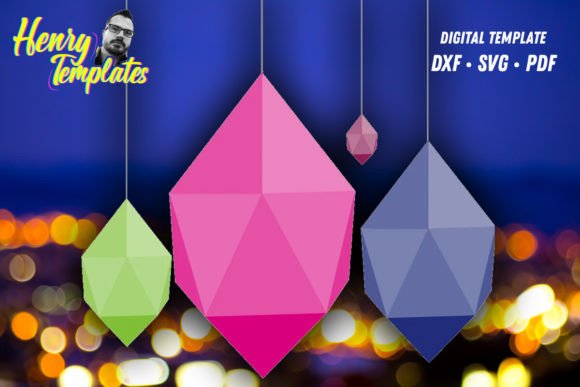
The first thing that strikes me about the 3D Jewel Template for Cut out is its bold geometric presence. It does not try to be subtle. The design promises to introduce a dazzle of shimmer, suggesting a high-impact visual element. When I opened the file, the clean lines and defined edges stood out immediately. This is crucial because, in embroidery, clarity is king. A muddy design with poor definition will never look professional, no matter how expensive your thread is.
The mood this template creates is one of modern elegance mixed with playful geometry. It feels versatile enough to fit into various aesthetics, from minimalist boutique branding to festive holiday decor. The "3D" aspect in the title suggests depth, which in a cut-out context usually means layered elements or clever shading that mimics dimensionality. For an embroidery project, this means we need to pay attention to how the layers interact. Does it rely on dense fill stitch areas to create shadow? Or does it use strategic running stitch outlines to define the shape against the fabric? Understanding this visual personality helps us decide where it belongs.
Real-World Application: The Custom Tote Bag Test
To truly judge a design, you must imagine it on a product. Let us consider a common scenario for many Etsy sellers and craft business owners: a custom embroidered tote bag. Canvas is a sturdy fabric, but it has a distinct texture. I envisioned placing the 3D Jewel Template for Cut out on a natural cotton canvas tote. The jewel shape, with its sharp angles and potential for metallic thread accents, could serve as a striking focal point.
In this context, the design acts as more than just decoration; it becomes a brand identifier. If I were creating a line of handmade product items for a boutique, this jewel could be the signature mark. However, the success of this application depends heavily on execution. If the design is too small, the intricate details might get lost in the weave of the canvas. If it is too large, it might distort the bag’s structure. I would recommend testing this at various scales to find the sweet spot where the stitch density provides coverage without making the fabric stiff and unyielding.
Versatility Across Product Lines
Beyond tote bags, where else does this shape shine? I see strong potential in sweatshirt embroidery. A crewneck sweatshirt offers a large, flat canvas on the chest or back. Here, the jewel could be scaled up significantly, allowing for richer thread color blends. Imagine using variegated threads to enhance the "shimmer" effect mentioned in the description. It could also work beautifully as an applique design, where the jewel shape is cut from a contrasting fabric like velvet or satin and then stitched down, adding actual physical texture to the piece.
For baby embroidery or nursery decor, the approach needs to be softer. While the jewel shape is geometric, using pastel thread colors and reducing the complexity can make it suitable for a baby blanket or a personalized gift. However, caution is advised. Babies have sensitive skin, so any cut-out elements or dense stitching on the inside of the garment must be covered or finished smoothly. Always consider the end-user’s comfort when adapting a bold design for delicate items.
Holiday gifts are another natural fit. The "dazzle" factor makes it ideal for Christmas ornaments, decorative pillow covers, or even as an enhancement for background decor in seasonal displays. As a digital embroidery file, it allows creators to quickly adapt the color scheme to match specific holiday palettes, from deep reds and greens to icy blues and silvers.
Technical Considerations and Pitfalls
While the aesthetic appeal is strong, we must address the technical realities. The term "Cut out" implies that this design might involve open spaces or requires precise cutting if used as an applique or stencil. In machine embroidery, this means we must be mindful of hoop size and stabilization. If the design has large open areas surrounded by dense stitching, the fabric may pucker without proper support. I always recommend using a cut-away stabilizer for stretchy fabrics like t-shirts or caps to prevent distortion over time.
Textured fabrics present another challenge. On a thick towel or a fuzzy fleece, fine details can disappear. If you plan to use the 3D Jewel Template for Cut out on such materials, simplify the design by removing tiny internal details or increasing the stitch width. Similarly, on dark fabrics, ensure your thread choice has enough contrast. A dark blue jewel on a black shirt will vanish unless you use a lighter shade or a metallic thread to catch the light.
Curved surfaces, like caps or hats, require extra care. The rigid geometry of a jewel shape might not conform well to the curve of a cap front panel. In such cases, consider breaking the design into smaller segments or using a flexible backing. Always test on scrap fabric first. This is non-negotiable for professional results. Check how the satin stitch borders hold up after washing and whether the cut edges fray.
Enhancing Brand Value and Customer Trust
From a business perspective, the quality of your design assets directly impacts customer trust. A crisp, well-digitized embroidery file signals professionalism. When customers see a clean, vibrant finished product, they perceive higher value. The 3D Jewel Template for Cut out, when executed correctly, can elevate a simple item into a premium piece. It adds a layer of sophistication that generic clipart cannot match.
For commercial embroidery projects, consistency is key. If you use this jewel as part of a larger collection of design assets, ensure that the style matches your other offerings. This builds brand recognition. Buyers engage more with shops that have a cohesive visual language. Whether you are selling personalized gift items or custom apparel, the precision of your embroidery reflects the care you put into your craft.
Final Designer Notes
Before you commit to a large production run or list this as a new product in your small shop product lineup, take these practical steps. First, verify the licensing terms. Since this is a digital product, confirm whether you can sell the printed mockup or the physical items made with it. Second, test the design in black and white. This helps you see the contrast and structure without the distraction of color. Third, inspect the stitch path. Look for unnecessary jumps or trims that could slow down your machine or cause thread breaks.
The 3D Jewel Template for Cut out is a promising asset for designers who understand the interplay between shape, texture, and thread. It is not just a shape; it is a tool for creating visual interest. By respecting the technical limitations of your machine and fabric, you can transform this digital file into a tangible, shimmering reality that delights your customers and strengthens your brand. Happy stitching.